


Rachel Kowalsky doesn’t have a big yard. It’s no more than a quarter of an acre in Jaffrey. But on that small lot, life is teeming.
Kowalsky has turned her yard into a certified nature area — a place that supports wildlife by providing native plants, water sources, shelter and nesting sites for birds, bats, bees and caterpillars to produce young.
It’s part of a growing movement to plant native species that support local pollinator and wildlife populations. It’s part of the solution to a quietly growing problem in the state and nation.
Gardeners like Kowalsky are doing their part by restoring habitats and providing food sources that offer the best nutrition for local native species – the ones they evolved alongside.
Kowalsky joined the effort alongside other gardeners such as Angelica LeBoeuf of Rindge, who’s in the middle of a multi-year plan to build out a native garden.
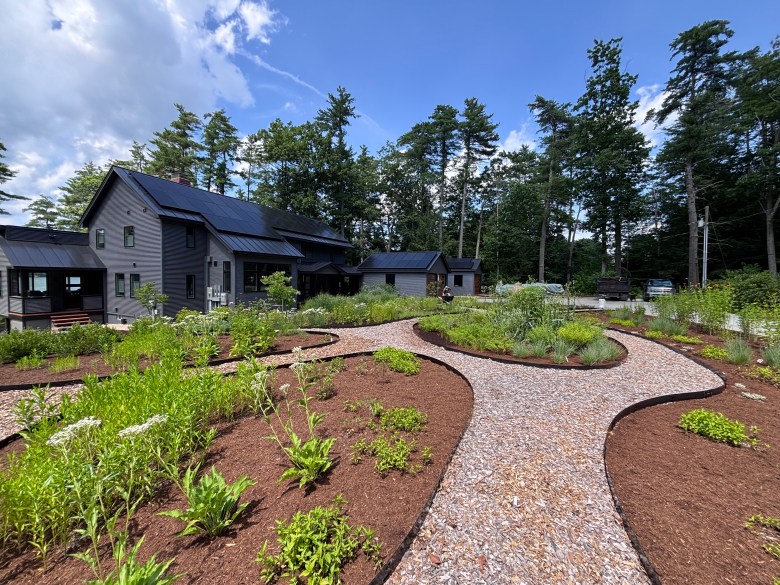
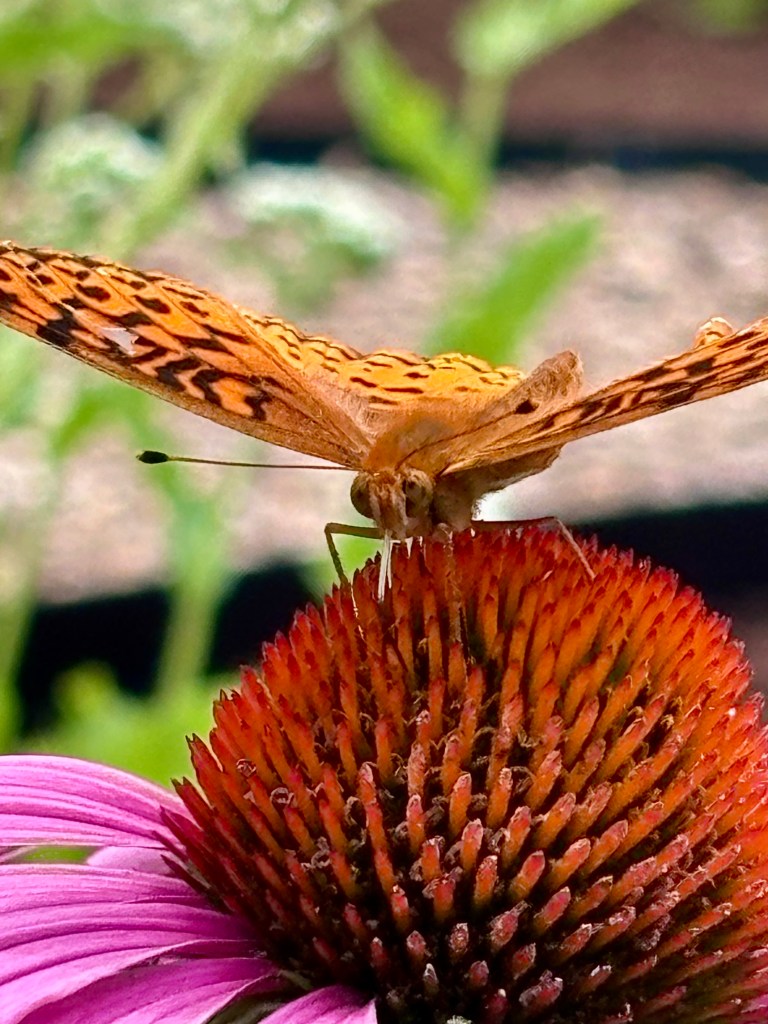
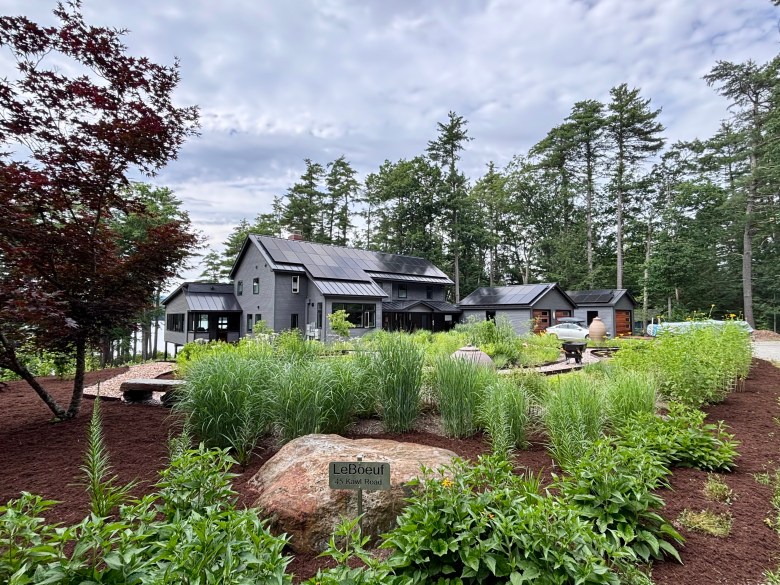
While the LeBoeuf family renovated their home on the Contoocook Lake shoreline two years ago, they dug up the yard significantly.
“As we were putting things back together, I knew I wanted native plants,” said LeBoeuf. Her proximity to the lake has made her more aware of plants that require less fertilizer and fewer pesticides, she said. She’s spent the last two years working with the local native plant nursery and landscape designer, Fassett Farm Nursery in Jaffrey, to build out native plant beds in both her front and back yards, with at least another year of planting planned.
Though her plan is still underway, LeBoeuf said she’s already seen the payoff: more songbirds, hummingbirds, bees, butterflies, toads and turtles.
A growing movement
Gardeners increasingly want native plants, according to surveys from the National Garden Association and the National Wildlife Federation. The number of gardening households intentionally buying at least some natives has grown from about one in five to almost one in three between 2019 and 2026. Horticulturalists have also reported rising demand — a survey of 281 growers, nurseries, landscapers and botanical gardens by Nursery Management found that 82% reported increased demand for native species among their customers.
The movement aims to restore habitats for declining wildlife populations. The New Hampshire Audubon estimates that North America has lost over three billion birds in the last 50 years. Of the 190 nesting and breeding bird species, 80 are declining, with the steepest declines among those that nest in shrubby or grassland habitats, migrate the farthest, or feed on insects in flight, such as swallows, swifts, nighthawks, and whip-poor-wills.
Insects are also declining, including important pollinators. A University of New Hampshire study in 2019 found that more than a dozen wild bee species in the Northeast were declining dramatically.
There’s no single answer to what is causing the decline. Habitat loss is only one part of the puzzle: Pesticide use, pollution and climate change have all impacted insects, and outdoor and feral cats and building collisions have been pointed to as threats to bird populations.
As broader demand for native plants rises, local garden centers also report a recent sharp increase in demand as customers become more educated on the issue.
Heather Culvington, a perennial associate at House by the Side of the Road in Wilton, said about 25% of their stock is now native trees, shrubs and perennials. Over the past five years or so, she’s seen interest from customers specifically seeking native plants — either to supplement their garden or to go completely native, usually for the benefits to local pollinators.
“Everybody’s been asking for natives,” Culvington said.
The garden center’s owner, Abby McFarland, recalled a customer asking for goldenrod years ago — something that, at the time, was an odd request.
“Now, it’s one of the more common plants we sell,” said McFarland.
Their suppliers have noticed the uptick as well, said Culvington, with some popular native plants becoming more available.
Other items, she said, are being requested by customers but are difficult to find on the market.
“It’s not available to us from our growers,” Culvington said. “There have been requests that we’ve tried to source and just can’t find it.”
Beth Coll, manager of Coll’s Garden Center & Florist in Jaffrey, said native plants have long been part of the garden center’s repertoire but she, too, has seen a large increase in customers specifically asking for them.
“We’ve been carrying a lot of these plants for a long time, but I would say in the last five years, there’s been a big uptick,” Coll said. “There’s definitely an awareness in people that want to get more pollinator value to their perennial beds.”
Coll said about 30-35% of the shrubs, and about 50-60% of their perennial offerings are native plants.
Non-native plant species, while often valued in landscaping for large, showy flowers and bright colors, can hold little to no nutritional food or habitat value for local birds, insects and other wildlife. They’re also more apt to become invasive themselves, or crowd out native plants.
Fassett Farm Nursery, which sells only native plants and garden design services, makes it its mission to educate gardeners about the importance of native plantings — and to let them know that native flowers and shrubs can also create beautiful gardens.
Fassett Farm owner and founder Aaron Abitz said research shows native plants are the foundation for maintaining healthy biodiversity for several insect species — and those up the food chain.
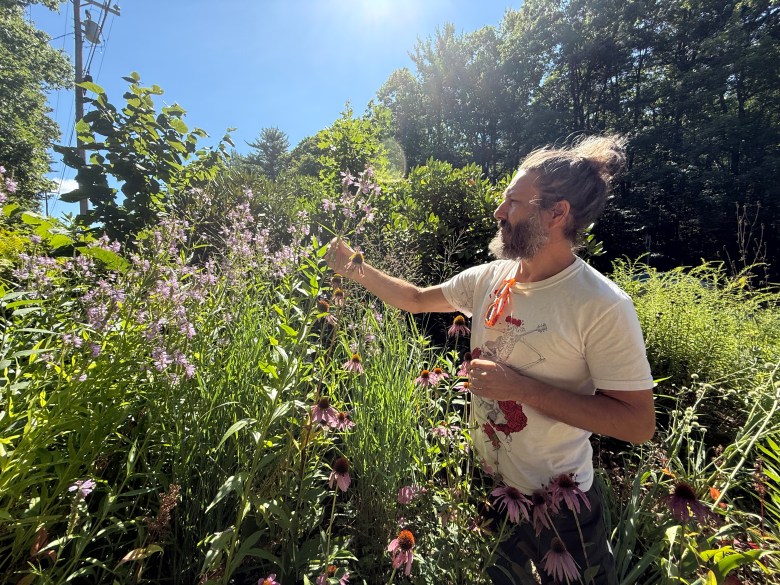
Research by Douglas Tallamy, an American entomologist, ecologist and conservationist who’s written several books on the importance of native planting, showed the difference in his own 10-acre property in Pennsylvania.
Tallamy converted his acreage into native plantings and documented over 1,370 moth species and 62 breeding bird species. That’s a significant number – about 44% of Pennsylvania’s moth species and 33% of its birds – on one piece of property, according to Tallamy.
Bringing back the bugs and birds
A 2009 study by Tallamy of six properties that transformed into native landscapes showed that those with native plants hosted 66% more bird species than conventional yards. Some rely on it wholly — a 2018 study from Tallamy showed that Carolina chickadees could sustain their populations only in areas where yards were at least 70% native.
But for other species, even a little bit goes a long way. A 2020 study by Tallamy showed that a few keystone plants supported most butterfly species.
You don’t need to turn your yard into a nature area to make a difference, said Uli Lorimer, director of horticulture at the New England-based Native Plant Trust.
Lorimer said studies generally show yards with 70% native plant species have the greatest diversity of moths and butterflies, and that benchmark has become a popular goal for those who want a native garden. But he acknowledged that’s an ambitious goal.
“Every person travels that journey individually,” Lorimer said. “If you’re not sure if it’s worth it, my advice is to start with a few natives, and just see what happens. See if you start seeing different wildlife in your yard that you didn’t before.”
It doesn’t even have to start with planting natives or removing non-natives, he said. For many, the first step is changing their gardening practices before changing their garden.
“Garden maintenance practices are nearly as important as intentional plant choices to support wildlife,” said Lorimer. “Using fewer pesticides, less fertilizer, leaving materials on site, composting, and having a brush pile — it’s an aspect of ecological horticulture that isn’t stressed enough.”
Lorimer, author of the “Northeast Native Plant Primer,” said that many grassroots movements — such as “No Mow May,” designed to leave flowers for spring pollinators by not mowing lawns in the spring, or “Leave the Leaves,” meant to discourage raking or leaf shredding to provide leaf litter habitats for insects — are often associated with the native plant movement but are actually maintenance practices.
It’s a way to start, Lorimer said, particularly for those looking for middle ground while supporting native populations.
Lorimer said studies show that leaving fall leaves on the ground promotes insect diversity well beyond spring.
“If you can leave it alone, or even relocate the leaves to your garden beds, you can support a whole ecosystem of organisms, from beetles, flies, moths and invertebrates that require that deep organic layer to survive the winter,” he said.
For those ready to take the next step, Lorimer said intentional choices of specific plants can do a lot of good.


“Broadly speaking, in New England, about 25% of pollinators — which include bees, wasps, flies, butterflies, moths — are specialists,” Lorimer said.
That means they need specific plants to reproduce successfully. The other 75% are generalists and will gather pollen from a much wider variety of plants.
“And as some of those specialist plants disappear from the landscape, it puts more pressure on the generalists,” Lorimer said. “But the species that support the specialists usually will also support the generalists.”
Native plants as food sources and habitat
Native plants, which have evolved alongside animal and insect populations, become food sources — sometimes very niche food sources — for those species.
Abitz said foragers such as deer and rabbits may find them appealing. And before there are butterflies, there are caterpillars, which need to eat before they cocoon.
Fassett Farm associate Brittany Cavanagh said there are ways to address this, including placing wires and guards to protect new plantings or using deer-repellent products or motion-activated sprinklers. Selecting natural plantings that deer aren’t interested in, such as bee balm or mountain mint, can also help deter grazers when incorporated into a garden.
But Abitz said part of the reason many people come to him is to design a garden meant to be eaten, at least a little bit.
“One thing we preach is to have a little acceptance,” Abitz said. “It is OK to have some munching. All it means is that the plant is playing its part in the ecosystem.”
Lorimer said those who want to provide food sources should consider plants that will provide blooms throughout the entire year, including in the winter, with a goal of having at least three different things in flower at all times — from willow bushes that bloom in March and April for early pollinators to aster and goldenrod, which bloom from late summer until early November. In the winter, viburnum, dogwood and winterberry can provide food for fruit-eating birds that overwinter.
Even planting specific trees can provide habitat. The Eastern red cedar tree produces seeds loved by cedar waxwings, and oaks can support up to 500 species.
Diversifying your garden is also a way to make grazing less destructive, Abitz said, and it reinforces that many of these relationships occur naturally. He recalled one customer who was concerned about damage to their dogwood, a woody tree native to the state.
“It came back the next year, just as healthy and happy,” said Abitz.
It’s something that those with natural gardens say they have come to love about their yards.
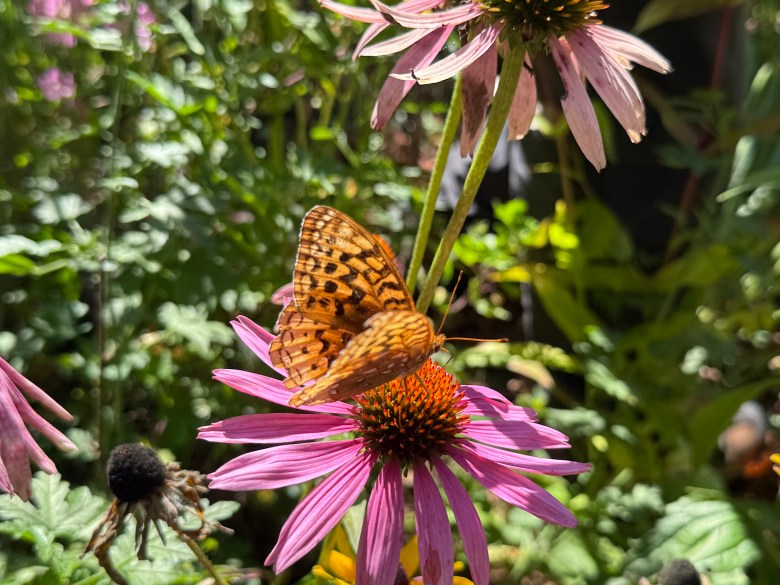
“I’m a big fan of bugs, bees and butterflies,” said Kowalsky. After all, she said, her main aim in planting natives was to support the state’s natural ecosystem, including letting it support itself. She planted milkweed for monarch caterpillars and butterflies; spicebush for spicebush swallowtail butterflies; and bee balm and coneflower for hummingbirds.
“Everything serves a purpose in my yard. I have a great number of bugs; I see a ton of butterflies,” said Kowalsky. “I have more fireflies and moths, and because I have more bugs, I have more birds.”
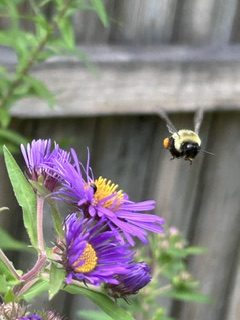
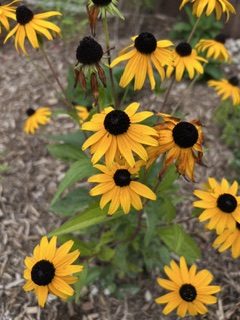
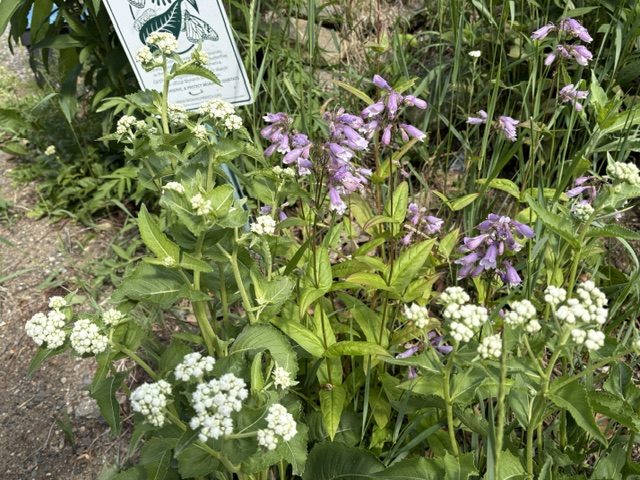
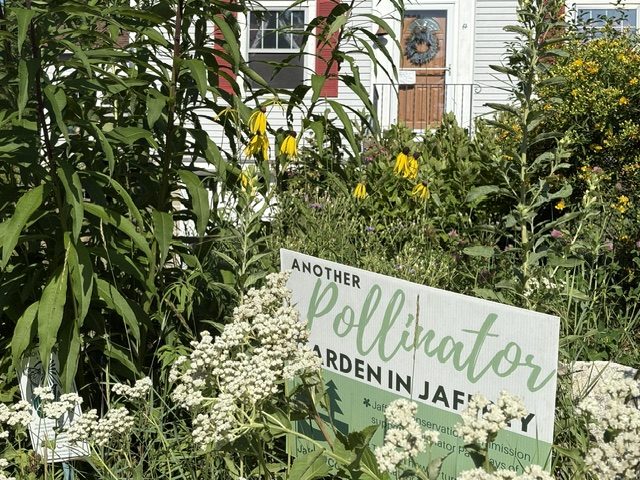
Scott Fontaine of Jaffrey said that before he put in his garden, his lawn was a biological desert. Now, he said, he sees many pollinators and insects, including bees, hummingbirds, and small songbirds.
“Birds that I never saw before,” said Fontaine. “The yard is so active in the afternoons.”
Fontaine said his lot is small and in the middle of downtown, without much access to wild spaces. His native garden is modestly sized, planted along the edge of his property, and he cut into his lawn to make room for it. But he said he sees that as a plus, having reduced his lawn maintenance, and the native garden needs little upkeep.
“In my case, I now have significantly less lawn to mow,” Fontaine said. “The plants have not required any fertilizer, so I’m not adding chemicals to the environment. Most of the plants are drought-resistant, so water is not being used to maintain them once the plants are established.”
Not all soil is equal
Native planting, or planting in general, can have benefits beyond creating habitat, said Cavanagh. She said she works with customers with several different goals.
Some choose a native garden because it generally requires less maintenance. While native plants can cost about the same or more upfront — at Fassett Farm, a two-quart plant is typically $17 to $18, and seedling plugs range from $4 to $6 — they usually require less irrigation because they evolved in New Hampshire’s climate.
Cavanagh said plants need the most care in the first year, when they are establishing root systems and are most vulnerable to grazing predators. During that year, plants are likely to need more support until they’re established – another reason Cavanagh encourages planting in stages rather than in a large overhaul.
Other customers have issues with too much water — muddy spots or bowls in their property that gather water after it rains. Installing native plants adapted to wetland or waterside conditions can help resolve those issues.
But not all soil suits all plants.
“Site conditions can easily narrow down your options,” said Cavanagh. “Full sun, partial sun, sandy soil, completely wet or full shade … there are just only so many species that we can use in some of those conditions.”
Cavanagh said few environmental conditions would support no growth, but gardeners may need to be realistic about what will thrive on their property.
Lorimer encouraged those interested in native gardening not to be afraid to try things or make mistakes.
“Every gardener, including me, has killed plants,” Lorimer said. “Every gardener has planted things they wish they didn’t, because now they can’t get rid of them. I can only encourage people: Try something, observe what happens, and no matter what, you’ll be a wiser gardener than the year before.”
Thanks for reading this story! Please take a moment to fill out our survey as part of this solutions journalism project: https://docs.google.com/forms/d/e/1FAIpQLSfR_w903yGXWVGQcpl_9QMrzfz2O25iEzPLJxZLRNVgTorY5A/viewform.
