

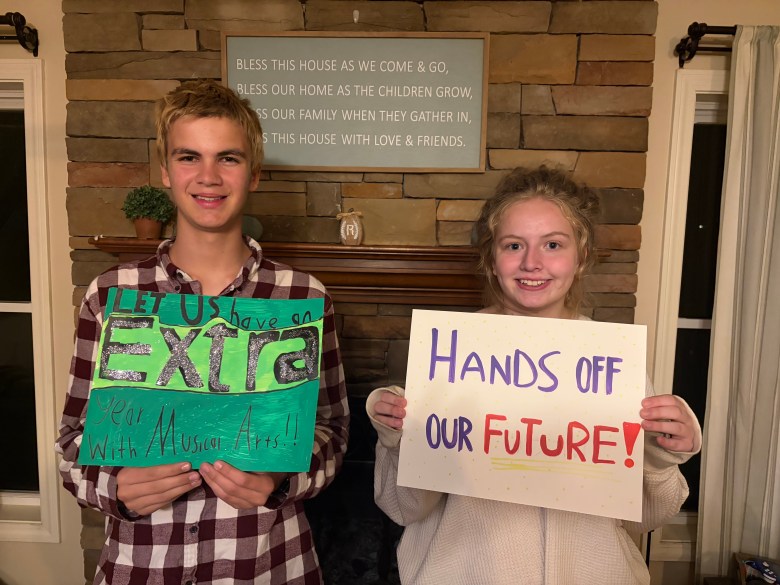
Organizers Logan Morrill and Isabell Ratliff with protest signs they will bring to the polls on Nov. 3. Credit: Courtesy 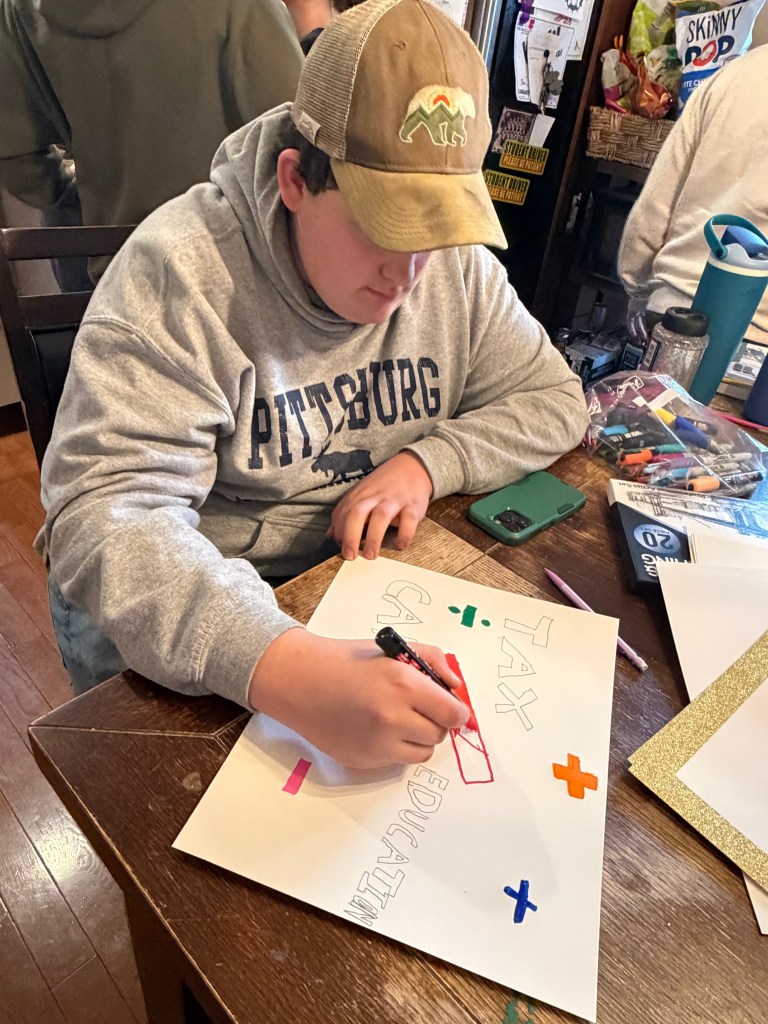
Jake Amadon works on a poster. Credit: Courtesy 
Ava Matos holds up her sign, declaring “People Over Profit.” Credit: Courtesy 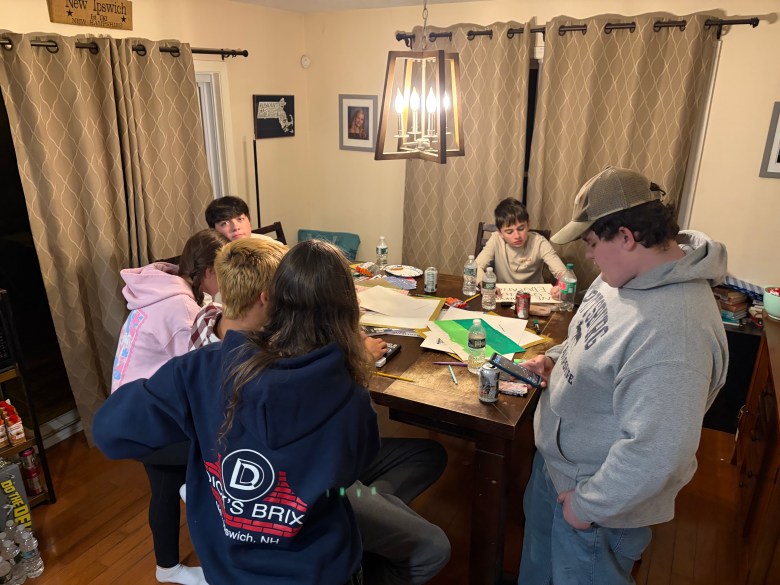
Laci Wescott, Jake Amadon, Morgan Morrill, Logan Morrill, Eliana Nicholes and Joey Ferullo gather to work on posters. Credit: Courtesy 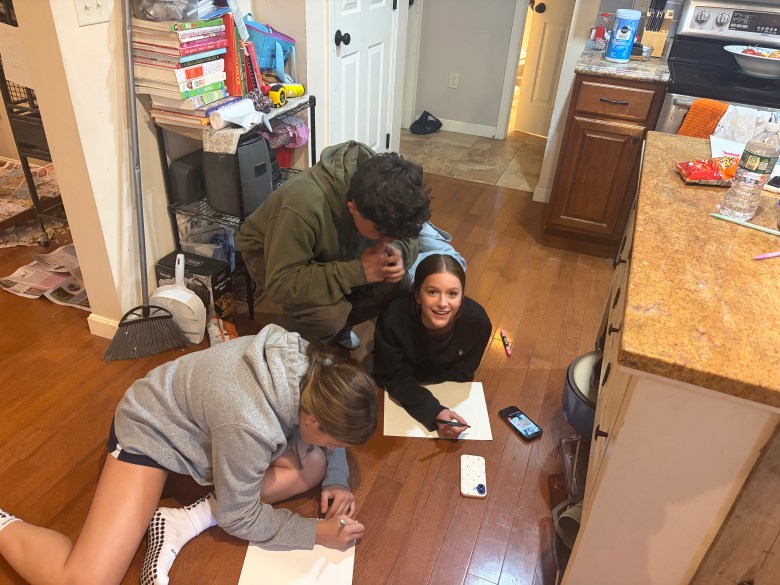
Carter Pierson, Kendra Nicholet and Leah Cote create posters. Credit: Courtesy 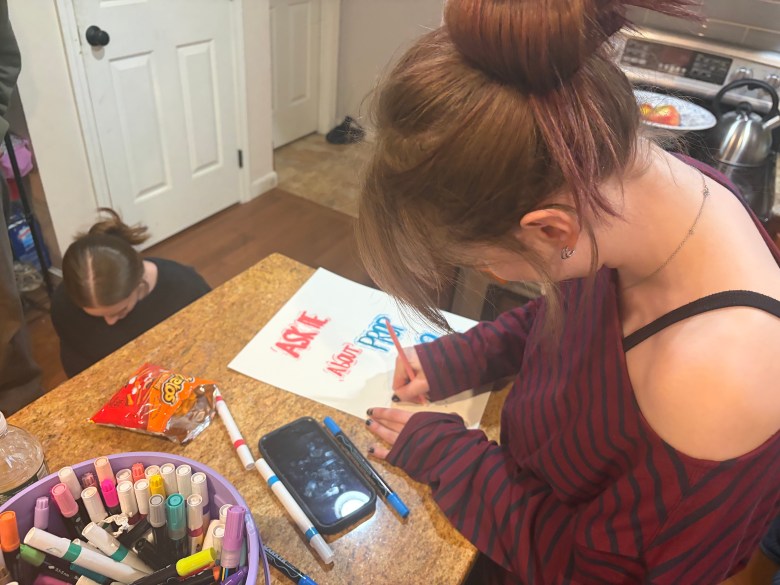
Tea Shuster stencils a poster. Credit: Courtesy 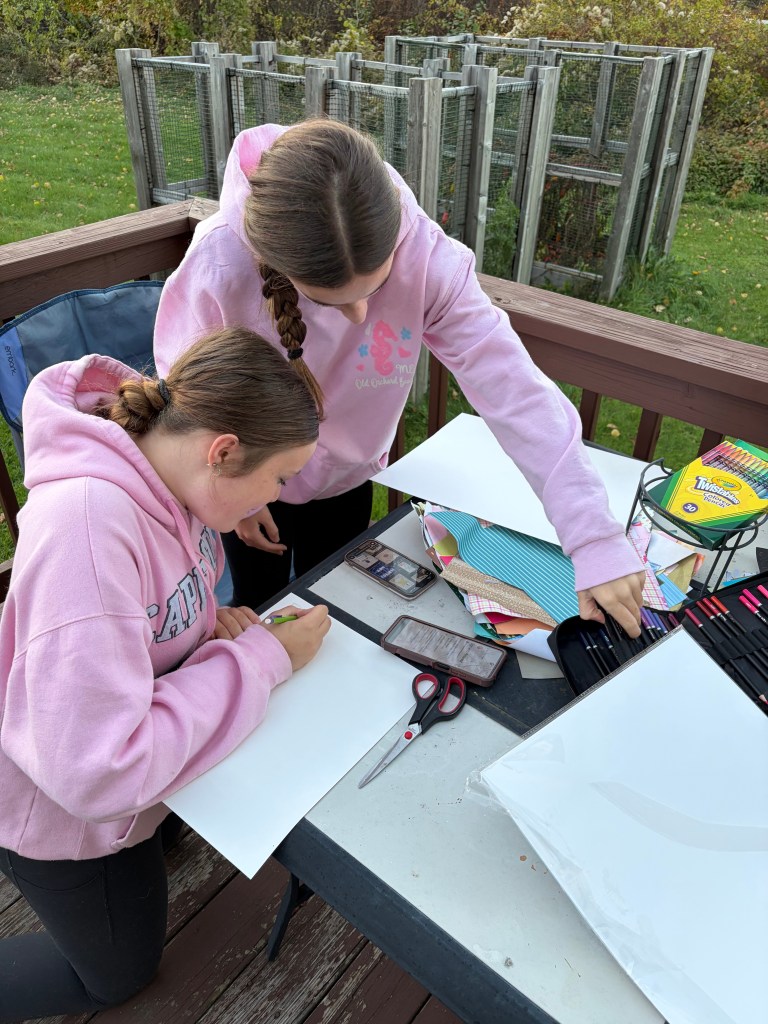
Aubrey Amburgey and Eliana Nicholes work on posters together. Credit: Courtesy 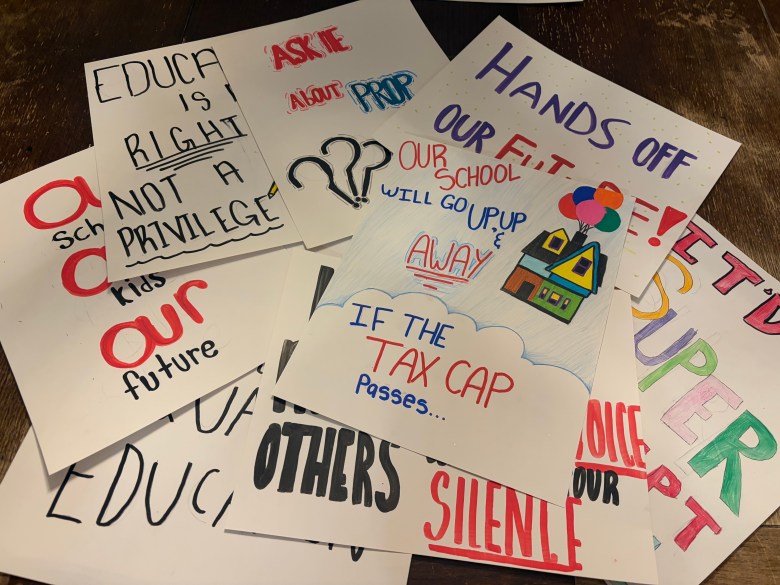
Signs and posters created by Mascenic students. Credit: Courtesy
Though they are not yet old enough to vote, a group of Mascenic Regional High School students is organizing a grassroots campaign against a Nov. 3 ballot question that could impose a strict cap on local school funding.
Isabella Ratliff, a junior from New Ipswich, spearheaded the student movement after following School Board discussions on potential budget cuts and was alarmed to find that many of her fellow students were unaware of the upcoming ballot measure.
“I brought it up one day, and no one knew,” said Ratliff. “Obviously, that’s a scary thing.”
Ratliff partnered with Logan Morrill, a sophomore from New Ipswich, to mobilize students, launch social media campaigns, and distribute educational materials detailing the proposed tax cap’s potential impact on the Mascenic School District.
“I believe we should use our voices and stand up for what we believe in,” said Ratliff. “Even though we can’t vote, we can encourage others to. We have a voice, even though we’re young.”
The ballot question stems from House Bill 1300, passed by the state Legislature earlier this year, which requires every New Hampshire municipality to include a school tax cap question on November ballots in 2026 and again in 2028.
If local voters approve it, the measure would cap the school portion of the property tax levy at the previous year’s level, adjusted for inflation, while limiting School Administrative Unit (SAU) spending to 6% of total school district appropriations. Although the state legislation specifies that caps apply directly to central office administrative operations rather than classroom instruction, district officials warn that operational lines are intertwined.
According to a question-and-answer sheet the Mascenic School District disseminated, “Limiting the revenue available to operate a school district can have consequences that reach far beyond the central office,” because the SAU office supports the daily operations of schools, including budgeting, payroll, accounts payable, human resources, curriculum coordination, and more.
The district’s most recent estimates suggest it would have to cut $3 million from its budget to meet the tax cap levy. While no decisions have been made yet, the School Board has been considering scenarios including tuitioning students to other districts, closing the middle school, or reducing staffing and extracurricular and current academic programming.
Morrill said he wanted to fight for his teachers, who are the “only reason I, and many other students, get up and go to school every day.”
He said that letting people know how students feel is the best way to help their school.
“I think this is really important. It’s the only way we can have a voice,” said Morrill. “I believe if you try hard enough, you can do anything.”
He said students are responding.
“It’s honestly such a great feeling,” said Morrill. “Every single day I have people coming up to say, ‘How can I help? What can I do?'”
Ratliff said people who want to support the group can share their social media posts or print and display their “Vote NO” fliers in public places. The group can be found on Instagram @no_price_to_high_for_education, on Facebook at Vote NO for tax cap, and on TikTok @Save.our.schools.