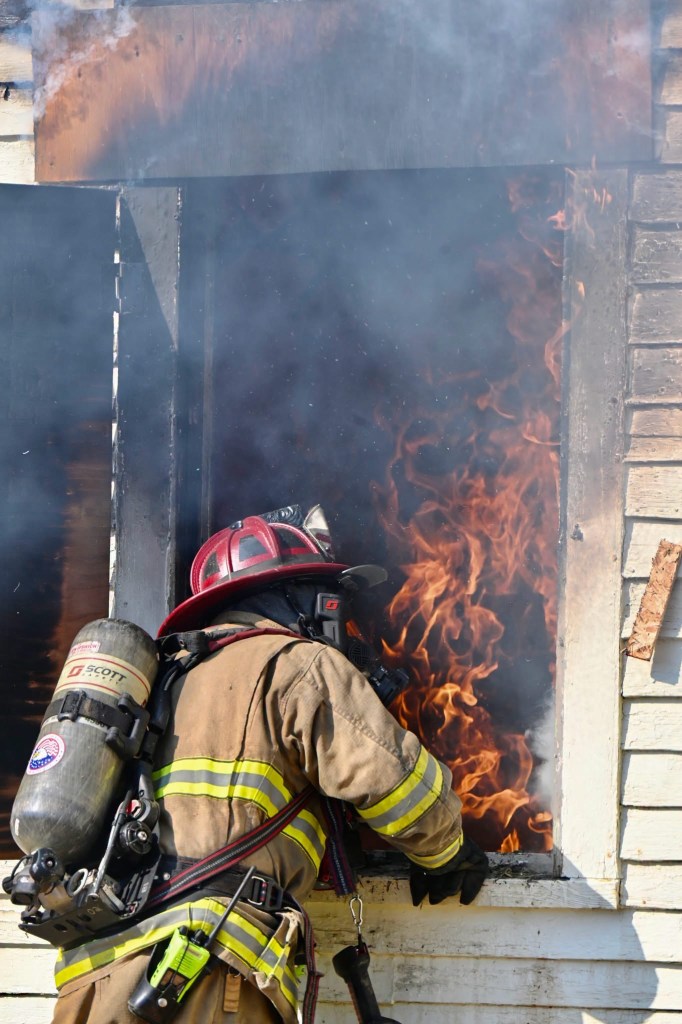
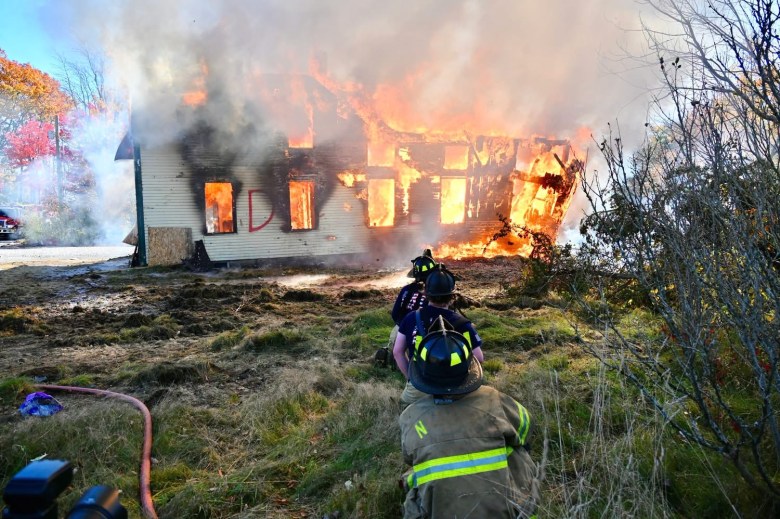
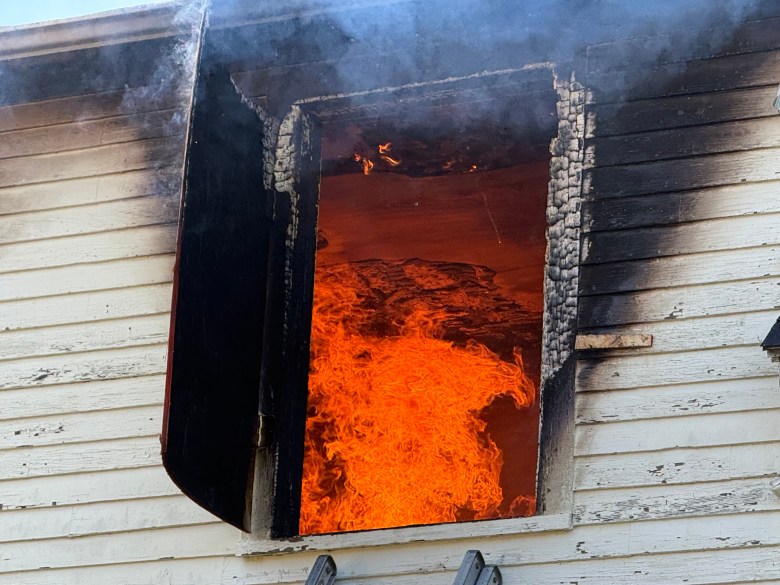
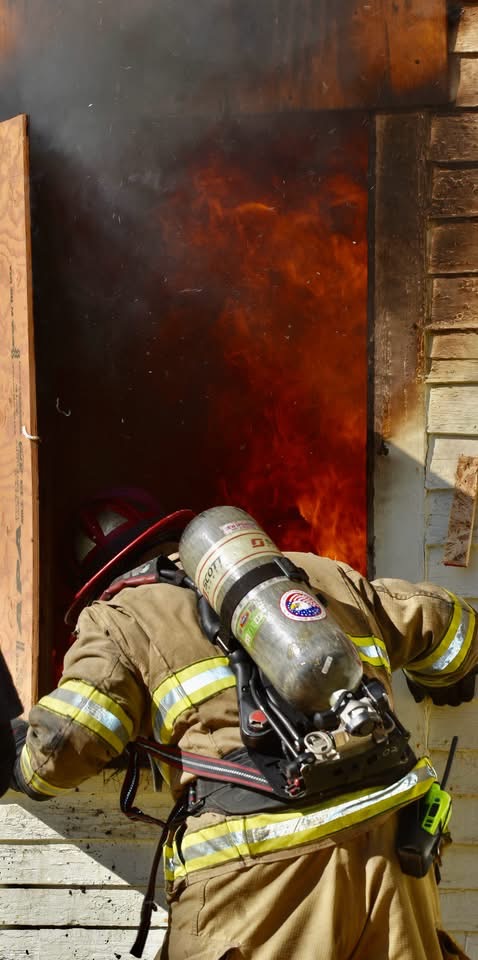
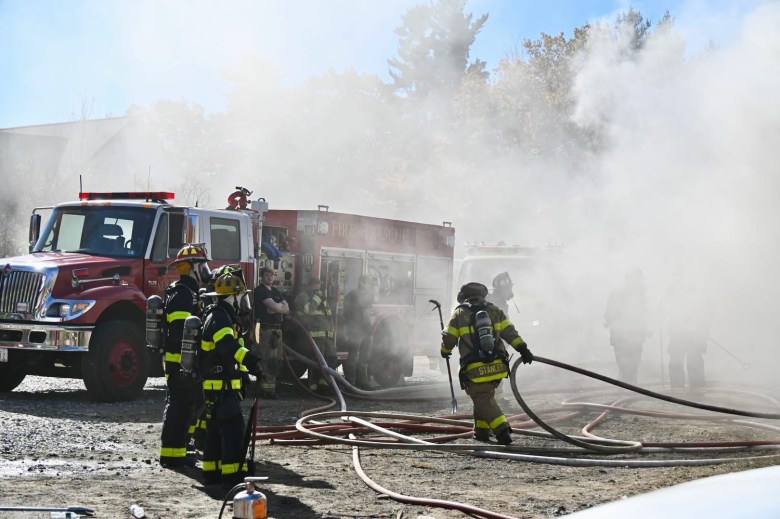
Smoke filled the air on Appleton Road in New Ipswich on Sunday morning, and fire trucks and ambulances lined the road. Flames flickered in the windows of the second floor of a small white farmhouse close to the road.
But it was not an emergency.
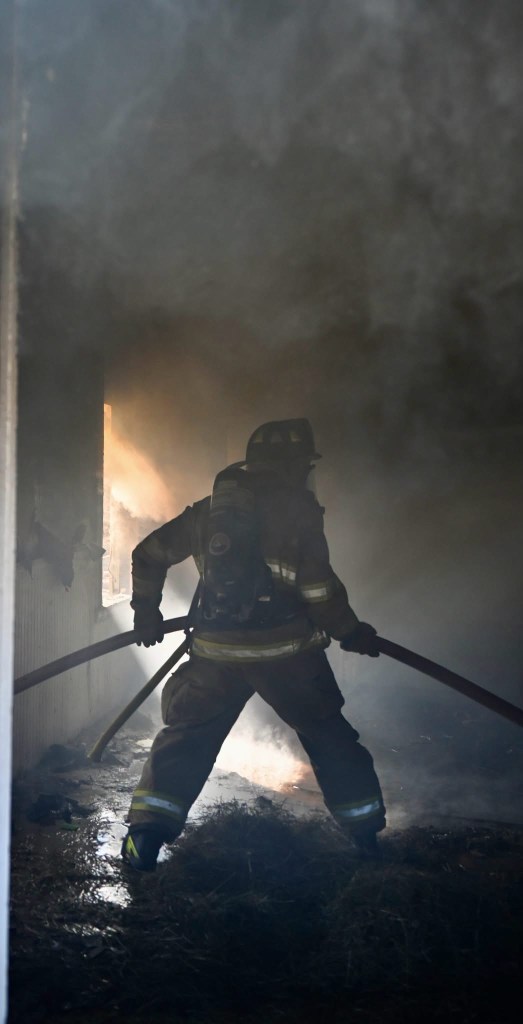
On Sunday, emergency response crews from across the region gathered for a rare training opportunity: practicing how to fight a house fire in a building slated for demolition. Firefighters, ranging in experience from veterans to probationary, got the chance to observe how fire spreads, practice ladder approaches and hose advancement, and experience conditions as close to real-world as possible.
Benji Krook and Dave Somero, who are involved with Brook Haven Farm LLC, the listed owner of the property, approached the New Ipswich Fire Department about using the building for training before it was knocked down to make way for a future subdivision. Fire Chief Benjamin Hatcher said he jumped at the chance — getting to train for house fires is an opportunity that comes around maybe once every year or two, he said, and is very valuable.
The three-bedroom house was built in 1788, according to local property records.
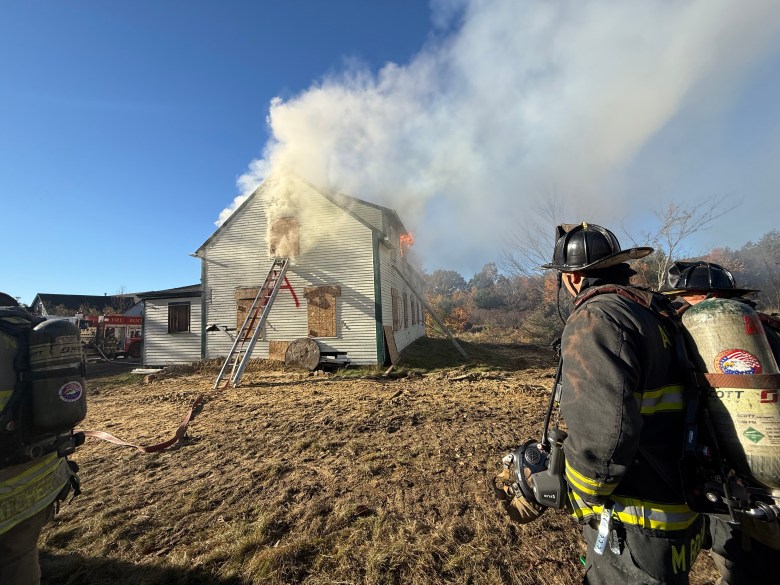
“It’s extremely important,” said Hatcher. “Not only for the guys to experience it, but for command staff, to be able to coach them through it. It’s experience, but it also builds trust in them in their officers, and the officers in their firefighters.”
Every training has a focus, said Hatcher, and Sunday’s was mainly on fire attack.
In small rural communities, manpower is at a premium in fire stations. Every crew that enters a home usually does three jobs, Hatcher said: moving hoses to the fire and attacking it; search and rescue; and venting, or making holes to release trapped heat and gases that might otherwise ignite.
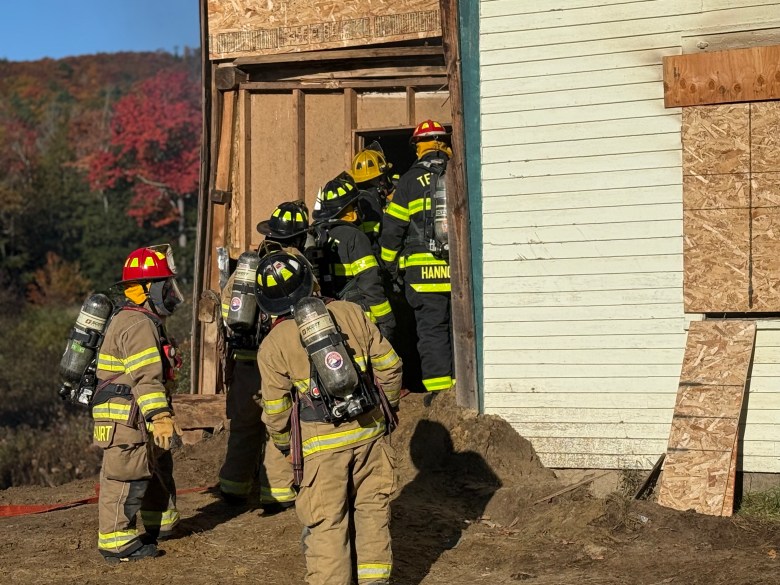
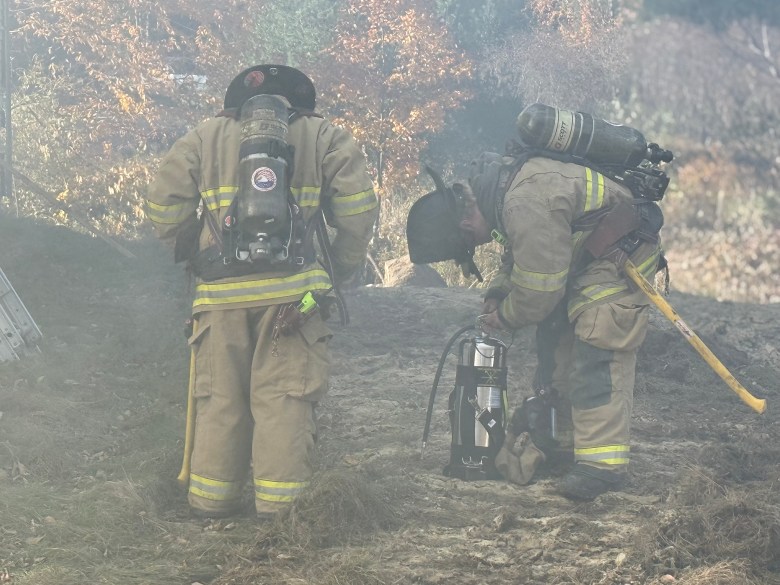
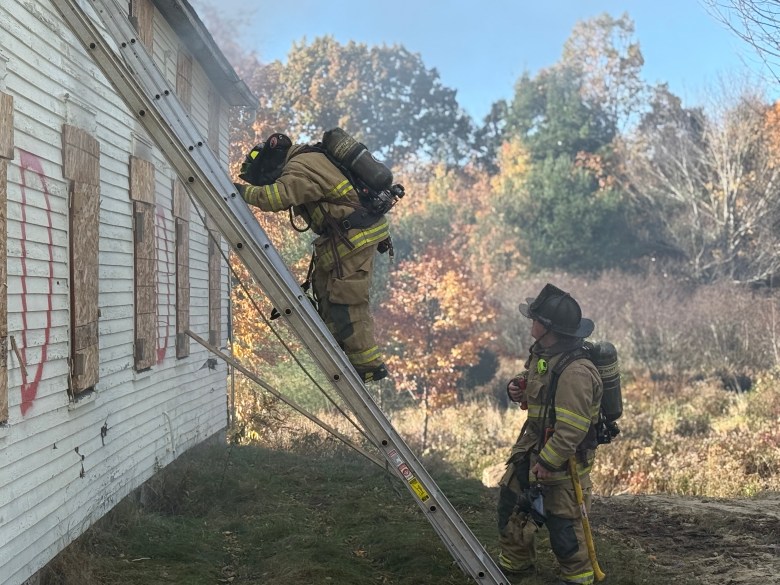
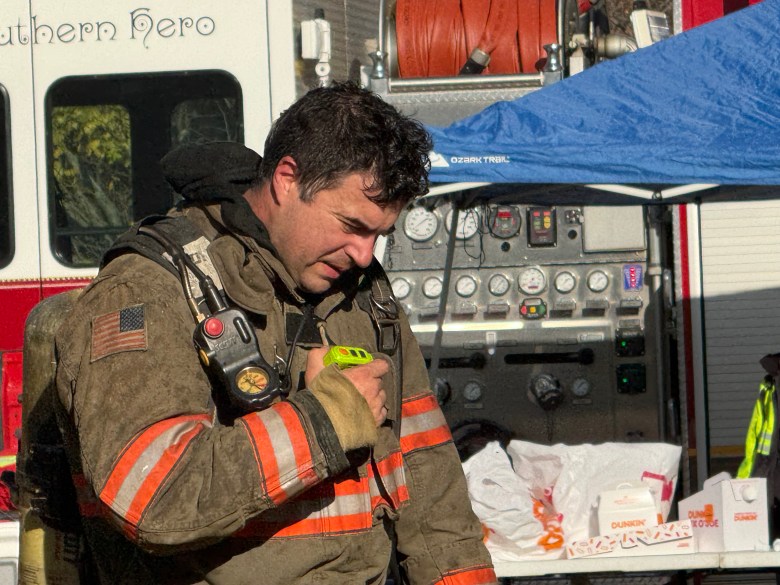
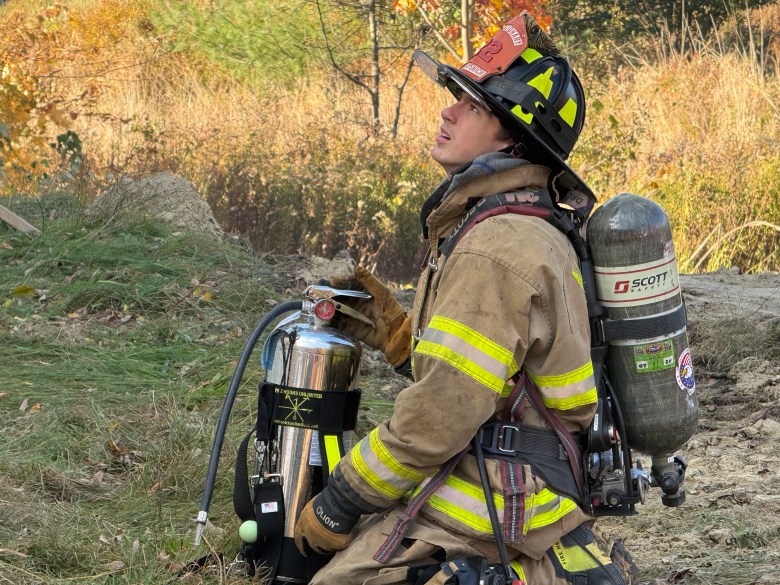
One of the biggest skills crews worked on Sunday was moving hoses, Hatcher said, “which sounds kind of ridiculous — ‘anyone can move a hose.'”
“But there are techniques and ways to do it methodically, because the main point is about preserving energy,” Hatcher said. “Because when you get to the fire room, you still have a job to do, and it’s work — a lot of work — to put out a fire.”
While crews were working they also built up barrel fires inside the house, which served several purposes — they increased the heat and smoke, simulating real conditions, but it also helped keep the heat level high and evaporate moisture. When teams douse rooms over and over for training, Hatcher said, it’s important to keep everything from getting so saturated that it becomes hard to relight fires. It’s a trick he learned during fire training in Alabama and something he’d never heard of before in the Northeast.
“That’s one of the reasons it’s so important to collaborate and travel outside of your own community for training,” said Hatcher.
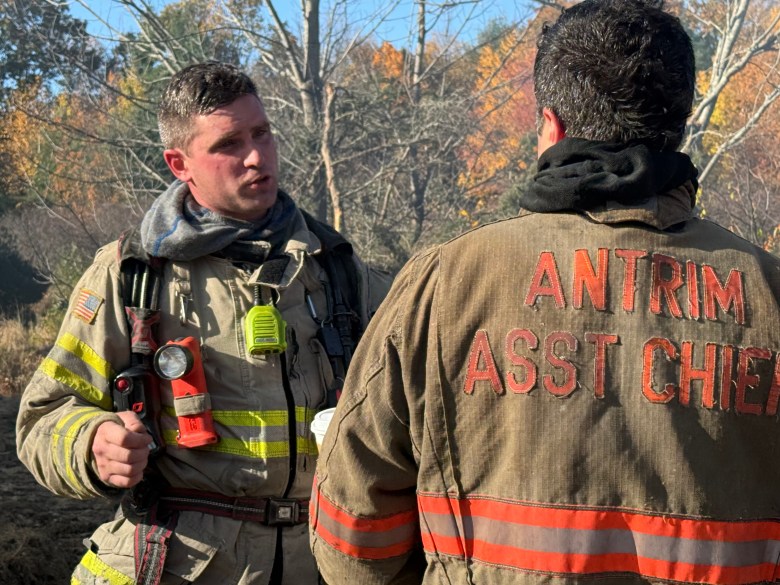
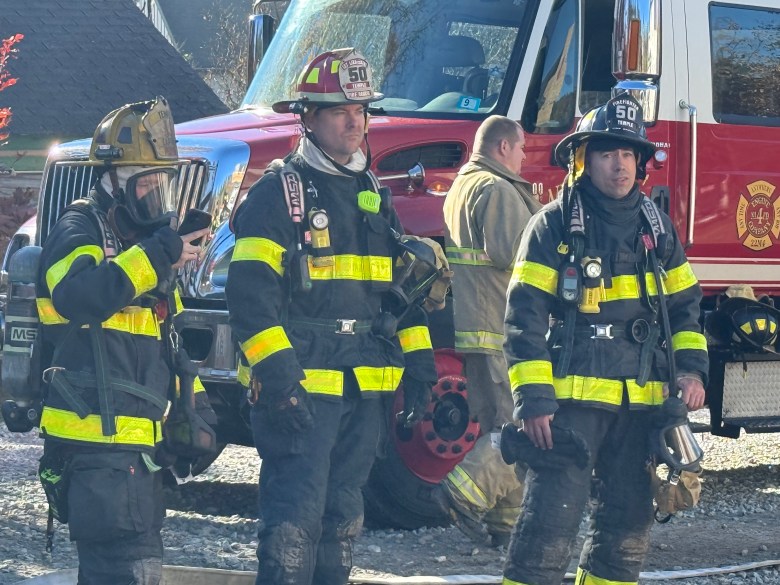
Crews from Temple, Antrim and Ashby, Massachusetts, also joined the training, which is typical for a major fire call in the area, when all surrounding departments respond. State fire instructors assisted to ensure the training was conducted safely, including shoring up rooms with additional sheetrock and plywood to prevent fire from penetrating the walls until they intentionally allowed it.
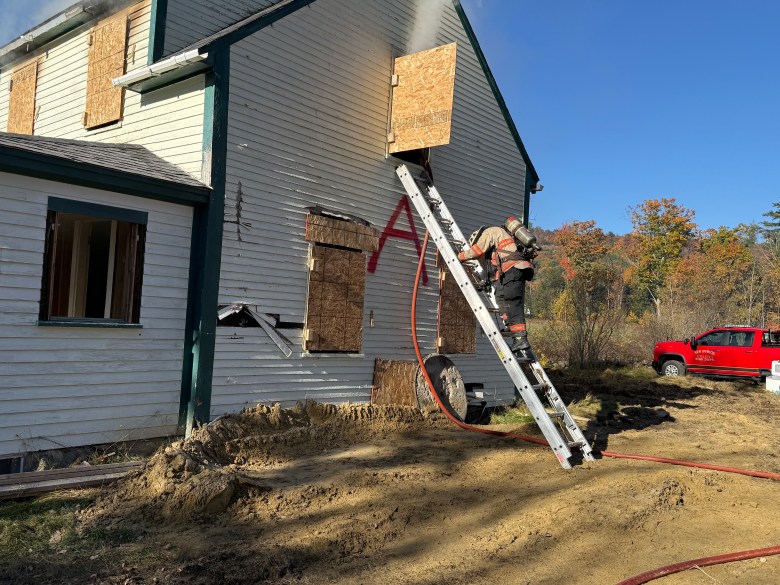
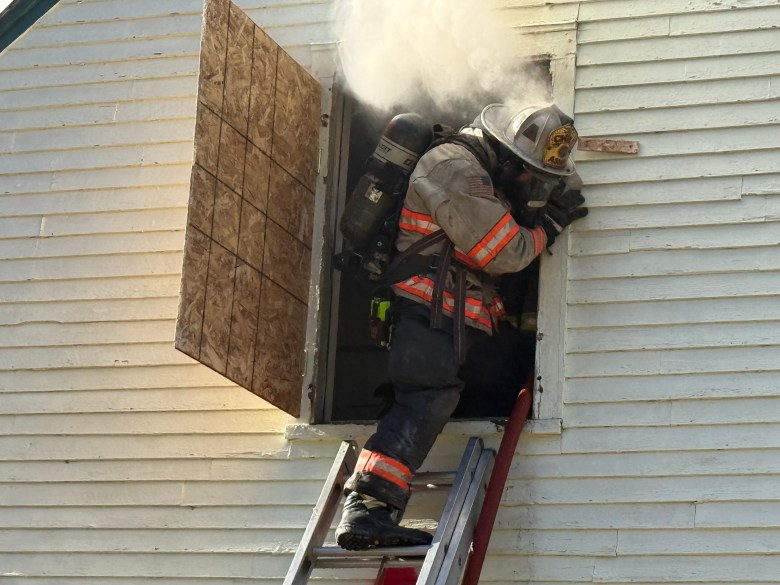
Hatcher said collaboration is key to rural firefighting, whether that’s training together or maintaining communication between departments about who has what equipment, so no one town has to bear the total burden.
“I think one of the things I noticed was how well all the towns worked together. You could have a crew with people from New Ipswich, Temple and Ashby on it, and a bystander would have no idea that was three towns on one team, with how well they worked together,” said Hatcher.
At the end of the day, the building was allowed to fully burn to the ground, having served its purpose.